

CS2 Observer Guide: Tips from the Booth
Camera timing, player switching logic, bomb tracking, and the mental habits that make a great CS2 observer. Practical tips for all experience levels.
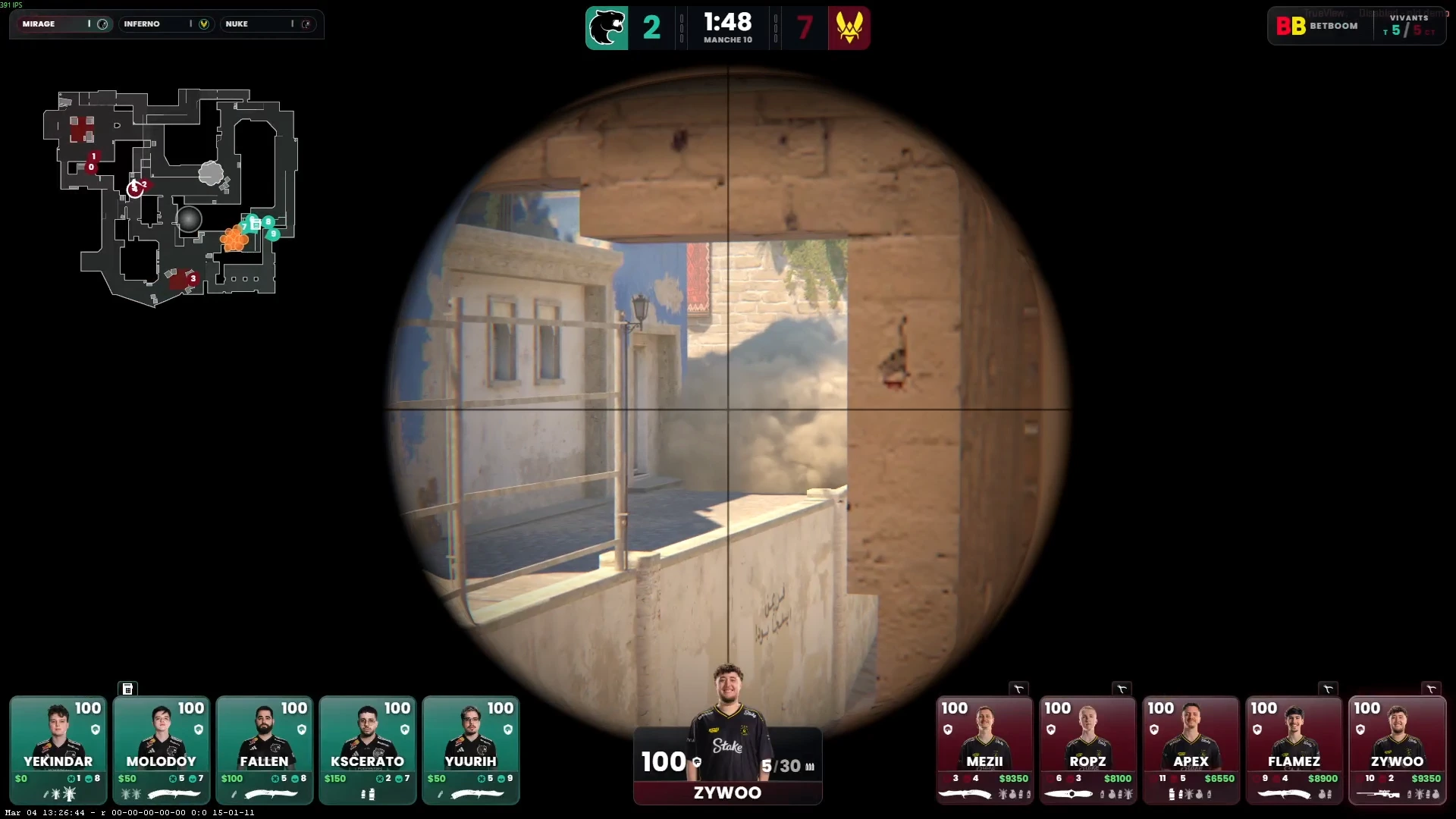
The Mindset of a Great CS2 Observer
Great CS2 observers think like film directors, not like players. Your job is not to watch the match — it's to tell the story of the match to someone who can't see what you see. Every camera decision is a narrative decision: what does the viewer need to understand right now?
The 3-Second Rule
Never show a player for fewer than 3 seconds unless it's an emergency cut (immediate kill about to happen). Viewers need time to orient themselves to a new perspective — who is this player, where are they, what are they about to do? Rapid cycling without dwell time leaves viewers confused.
Following the Economy
Economy is the meta-game of CS2, and understanding it makes you a better observer. Before each round starts, quickly check who is buying heavy vs eco. An eco round from the T-side is likely to result in a rush — position your camera for the A or B ramp rather than mid. A full buy after a T-side gun round likely means a slow CT-side play with smokes.
CutROOM's observer HUD shows team economy at a glance — use it between rounds to predict the next round's action before it unfolds.
The Bomb is Always the Story
From the moment the T-side leaves spawn, the bomb carrier is the most important player to track. Where the bomb goes, the round's narrative follows. When the bomb is planted, you have approximately 40 seconds of high-stakes drama — do not waste it by being on the wrong player.
Key bomb-tracking habits:
- Know who has the bomb at all times (CutROOM HUD highlights the carrier)
- Follow the bomb carrier when they make a site commitment
- Show the plant animation — it's a key dramatic moment for viewers
- After the plant, transition to the most likely CT approach route
Anticipating Plays
The best observers are 2–3 seconds ahead of the action. This requires reading the game:
- If 4 Ts are smoking B, the bomb is going B — be there before they push
- If the CT side has used all timeouts, expect desperation — watch for aggressive peeks
- After a T kills the first CT on the A site, expect the second CT to peek — stay close
You will miss plays. That's inevitable. The goal is to minimise misses through anticipation, not eliminate them entirely.
Working with Casters
Establish a simple communication system with your play-by-play caster:
- A quick "going X" from the caster signals they're about to reference a specific player — follow the cue
- Silence from the caster usually means they're watching what you're showing — trust your decision
- If the caster is building to a clutch moment, stay on the clutch player — the caster needs the camera locked, not cycling
Free Camera vs First Person
First person is the default for active duels. Free camera is best for:
- Economy overviews during the buy phase
- Showing a team's full setup before a round starts
- Tactical analysis segments between rounds
- Showing a rotation from behind the player
Free camera requires practice to use smoothly. Jerky or erratic movement is distracting — practise smooth panning and tracking shots in offline matches.
For the full technical observer reference — console commands, CS2 spectator settings, and advanced workflows — see the CS2 Observer Technical Guide.
Ready to broadcast CS2 like a pro?
Join the tournament organizers and casters who run CutROOM every day.